Thursday, April 24, 2025

The Psychology of Color: Hella Tsaconas at Work


My block in North Berkeley has become a fascinating confluence of experts in the field of vision. Last month I attended a gathering of ophthalmological physicists, neuroscientists, and psychologists who are long-time researchers in visual perception. We talked about everything from super recognisers to opinions about ophthalmologist/health bro Andrew Huberman.

Also in attendance was Hella Tsaconas, a veteran color consultant who's been studying color since she was a teenager. Fifty years and tens of thousands of clients later, she is one of the last remaining practitioners of Joan Songer's principles of Personal Style Counseling. Hella's sessions are a once-in-a-lifetime experience; a session is 2 1/2 to 3 hours ($425) at her fascinating Berkeley home which is full of books on the history of fashion and color. She carefully analyzes your color palette and also the psychology of how each color affects you. 

Hella takes a very limited number of customers each month. Anyone interested in experiencing her rare art of personal color analysis can find out more at HellaPersonalStyle.com.

Thursday, May 9, 2019

The Pink Assignment


Preparing for the Pink included quick shopping runs for discount shoes
and accessories, even pink earplugs for the BART ride (bottom right).
Shoes from AGL (top center) and Michael Kors (bottom left).
Dental assistant: "I like your outfit. Is your favorite color pink?" 
Me: "No, I hate pink. But I'm wearing it every day in April as an experiment because I really need to do something different."
I've been wearing black every day since I was sixteen years old. Despite every promise I ever made to myself to wear color, I always defaulted back to black... for three decades. But not this time. I decided to commit to color for April. Not only would I avoid black for the entire month, but I forced myself to wear PINK every day because I've always hated pink. Pink is girlish. Pink is weak. I relate so little to pink that I've asked myself: Who actually wears pink?

But what could I be missing out on? Do I really hate pink? Would people treat me differently if I wore pink?

I went on a mission to find out.

The last week of March involved shopping sprees at Buffalo Exchange and Nordstrom Rack. It was surprisingly easy to shop for a color I didn't like. No mulling over the perfect look, I loathed it all. Then I told my friends, everyone at the office, and emailed my 100+ clients that I'd be wearing pink every day of April 2019, and I couldn't turn back.

It was a profound month. This is what I discovered.

Tuesday, March 26, 2019

Rolfing and Aging: "Use It Or Lose It", Unpacked

Photo: Italo Melo
More and more people are coming to the realization that Rolfing is the fountain of youth. Living in harmony with gravity keeps you young. In fact, the most rewarding part of my job is watching my clients appear younger within months, and even reversing the earliest signs of aging that I see in clients who are only in their 20s and 30s.

We've all heard the adage "use it or lose it," and with Rolfing, that reality is addressed at the most minute levels, producing the most dramatic effects. I'll unpack what's going on:

1. We're always using something. Rolfing helps you do it better.
We don't only use our bodies for a jog or a cross-fit workout. Every hour, all day long, we're using something: to hold up our heads, to breathe, to stand up from our chairs, to interact with people, to walk. Many of these ignored yet ubiquitous movements are governed by smaller muscles around our spine, ribs cage, and even around our jaw and skull. They are the hundreds of less famous muscles like the multifidus, intercostals, and pterygoid – and they're all constantly reacting to gravity. Rolfing improves our relationship to gravity, thus increasing the efficiency of how your body uses all muscles, big and small, giving you smoother movement, better circulation, and a bright and youthful glow.

2. Using all your small muscles has huge effects.
The best example of this is the tensor fascia lata (TFL), a small muscle on the side of your hip that you'll become keenly aware of through Rolfing, I promise! You may have never heard of this little player, but it exerts a huge influence on the angle of the pelvis to the leg. Therefore, tightness there can cause the most visible postures of aging: the Seated Slump, the Old Man Walk, the Curved Back, the Condor Neck.

Releasing the tensor fascia lata and freeing up its whole range of motion not only lessens these bad posture habits but also puts the more well-known muscle groups – the gluts, quadricep, hamstrings, pectorals, and abs – into the correct position for better use. You'll stand and walk straighter. Your workouts will be more effective and you'll look nicer for it, too.

3. We need to use our nerves, too.
Frailty is one of the earliest signs of aging and it's also a strong predictor of how we're going to fare in the decade after it first appears. Frailty is a combination of weakness and a lack of coordination; you've observed it in someone you know when you slow down walking with them, you wait for the next light to cross the street instead of hurrying through the last one. But we can stop this decline. Avoiding frailty – in other words, staying supple and adaptive – requires not just muscle strength, but healthy and dense nerves in the muscles and joints.

Rolfing helps your nerves grow in a way that exercise alone does not. Through good posture, we constantly engage more nerves by naturally balancing the weight of our bodies in an adaptive and fluid manner, as opposed to fighting to hold ourselves up by being stiff and inflexible.

In a nutshell, by optimizing your posture, Rolfing helps your body use all its parts as Nature intended, whether you're going about your day or following your exercise routine.

Use it all and enjoy.

------

Related Post on Aging:
Emotional Complexity, Longevity, and Your Posture


Monday, March 25, 2019

What Is A 24-hour Cancellation Policy?

Massage therapists, hair dressers, estheticians, psychotherapists, and all sorts of Personal Services Providers -- including Rolfers like myself -- will often have a 24- or 48-hour cancellation policy.

Why?

If a client cancels at short notice, it is difficult to replace that lost appointment with another paying client, so the lost time equals a financial loss. For small practices, this adds up to a significant amount by the end of the month. Thus, therapists and body workers need to charge clients for missed appointments.

To avoid being charged for a missed appointment, you can:
1. Request a text/email reminder from me.
2. Schedule your session for the end of your work day when fewer obligations can get in the way. I take appointments after 5pm.
3. Try to re-schedule your missed appointment within the same week, I'm more likely to waive the cancellation fee.

Thank you for your understanding.

Wednesday, June 7, 2017

The Clinic For Funny Walks


"I walk funny.  I just walk... funny. I went to the doctor and he gave me muscle relaxers."

This was actually spoken in my office.

And again, recently:

"Some of my friends make fun of me and ask, 'Why do you walk so stiff?' I can't help it, that's just the way I walk!"

Well, you've come to the right place. My job is to fix those funny walks. But to understand this whole situation better, let's take a closer look at those special gaits.

Question #1: Why do I walk funny?

Wednesday, May 10, 2017

Hey You, Special People: 5 Qualities My Rolfing Clients Have

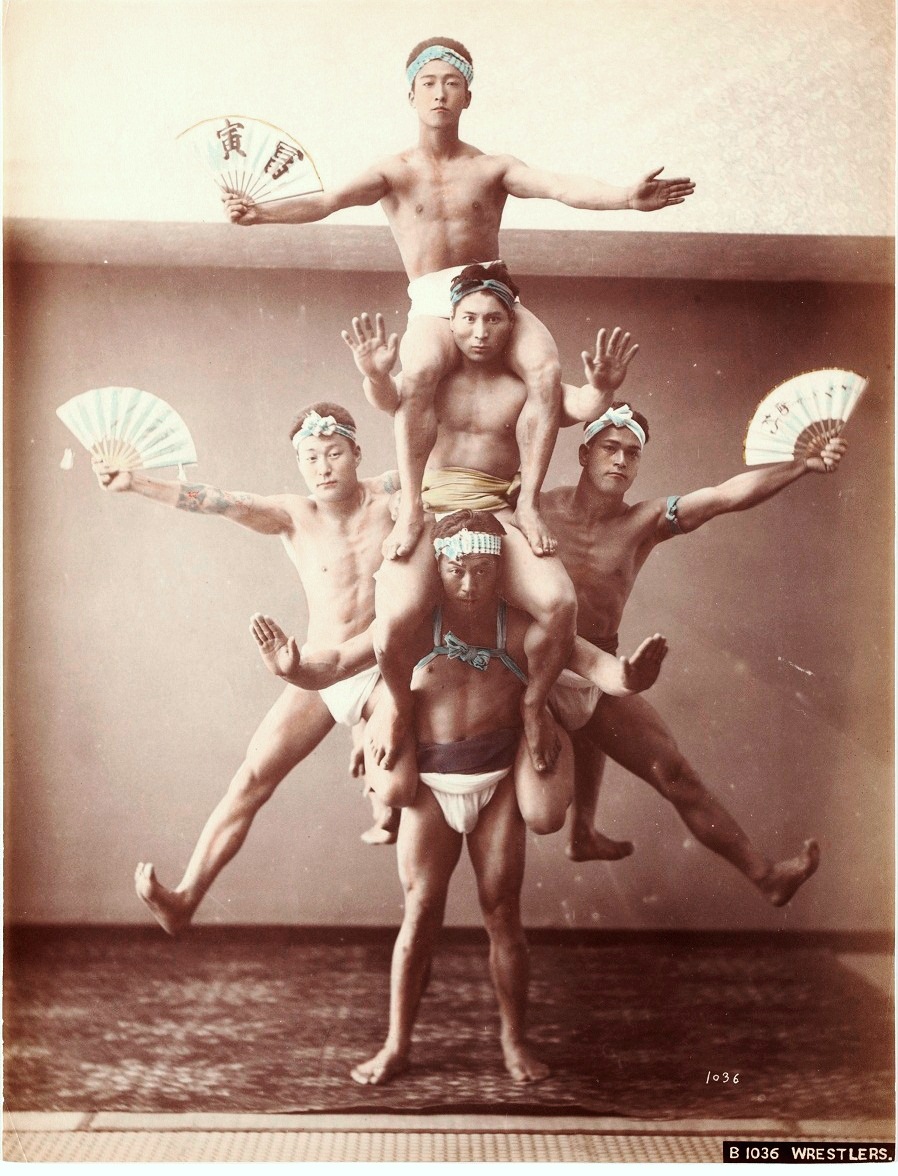
Japanese Acrobats/ wikimedia commons

What kind of people come for Rolfing?

The list is long: judges, computer programmers, nurses, ballet dancers, merchant marines, architects, bassoonists, lawyers, dentists, stock traders, fashion designers, cooks, bank tellers, pilots, surgeons, dog-walkers, painters, stay-at-home mothers, biologists, CEO's, psychotherapists, real estate agents, acrobats, poets, some busking street musicians on one hand, then a number of artists who can boast their Oscars, Grammys, Emmys. I've even had Republicans in my practice. And this list can go on.

But still... I can't say that "everyone" should come for Rolfing. Because despite their wild diversity, all my clients have these five qualities in common. 

Tuesday, April 25, 2017

Artists! Get Rolfing! Here!


This is the definition of sympathy. Aside from my Rolfing practice, I'm also a cellist and writer. To be honest, I'm a teeny bit more passionate about creative endeavors than I am about fixing bodies. Inevitably, I combine the two.


Artists, musicians, dancers, singers, and actors are exactly the people who really need Rolfing. I know this very well myself. The reasons are obvious: Rolfing frees the body to be more expressive, and many performers rely on their bodies for their livelihoods. Yet, sadly, exactly these people rarely earn enough to afford Rolfing.

I've heard this from too many artists: "I saved up all year for one Rolfing session!" And truly, they can only afford to come that one time. A year later, they will come back for another session, at which point we have to start from the beginning again. 
It pains me because Rolfing is a series of sessions that greatly benefits these creative people, yet the people who can't afford a Rolfing 10-session series eventually pay more for the complete series, if they ever get through one. 

So to buck this trend, I will bend over backwards to offer performing artists – and also teachers, non-profit employees, and caretakers – all sorts of reduced rates and payment plans. I want artists to get through a Rolfing series in the same time that a real estate agent, lawyer, or engineer does.

But I need your help. Rolfing is expensive because we Rolfers take much more time per client and have limited hours in a week. In addition, the Rolfing process is finite, not open-ended; after a Rolfing series, the body self-heals for a long time and successful, responsible Rolfers let their clients go when the 10-series is done. 


The more full-paying clients I have, the better I can afford to serve the creative community. I greatly appreciate it if you can spread the word and refer my practice to your friends and family! Thank you for helping the flow and keeping our creative community alive and well.

Audrey Mei, Certified Advanced Rolfer 

Find more information at www.standard-gravity.com. Feel free to contact me. My Rolfing office is located at 220 Bush Street #1084 in San Francisco, CA 94104.

Sunday, April 16, 2017

Emotional Complexity, Longevity, and Your Posture


Did you know? 
Black-and-white thinking makes you age faster. 

On the other hand, being able to see that nothing is all good or all bad has been found to slow aging in your DNA because it spares you the stress of extreme emotions. Here's how Rolfing, by improving your posture, helps you mellow out and keeps you young.

------------------------------

"It's amazing, I can see the silver lining!"

"Things that used to bother me just don't anymore."

"You know that movie The Matrix? That's me, dodging all the bullets, but instead I'm dodging stress at work."

I hear it often from my Rolfing clients. It's similar to what I felt when I received my first Rolfing 10-session series back in the 90s: At the time, I was in a double-degree program studying cello and biopsychology in Boston, and to top that off, I was pushing myself through pre-med, preparing for the MCAT, and applying for a Fulbright Grant at the same time. 

Needless to say, the stress was high. A C+ on an exam, an audition that I didn't have time to practice for, a glare from the conductor when I got to orchestra rehearsal late... Life was full of little awful events that made me feel horrible.

But how bad would I feel, and how long would it bother me? Those changed while I was getting my Rolfing series. I remember telling my Rolfer, Aline Newton, "It feels like stress used to cling to me like rain on a cotton jacket. Negative thoughts would hang around for days or weeks. But now it feels like the stress literally slides away. It rolls off me like water." In addition, I told her: "I can see how things are never all bad." 

And unbeknownst to me, I had gained a powerful tool for staying young and healthy, longer. In my 20s, it mattered little, but now being "greater" than 40 (ahem), this is worth gold.

Friday, April 14, 2017

Study: Rolfing Improves Neck Pain, Range Of Motion


This is from a 2009 article from Massage Magazine. I've been practicing for over 17 years at this point and can say that increased range of motion (ROM) from Rolfing applies to much more than just the neck, as many of my clients move more gracefully and more efficiently than before the 10-session series. "I use a lot less energy to walk, so I'm not exhausted by the end of the day" is a common thing I hear in my office.
And the article...
"Completing 10 sessions of Rolfing® structural integration (RSI) was shown to decrease pain and improve range of motion among people who sought treatment for complaints of neck pain and limited neck motion.
The study, “Rolfing structural integration treatment of cervical spine dysfunction,” was retrospective research that involved a total of 31 patients, six males and 25 females, ages 22 to 66, with a median age of 52 years.

Friday, December 16, 2016

2016 Gift Certificates


​

       Hurray!  You've survived 2016!       


It's been a muckier year than most, so you might be feeling an above-average accumulation of energetic gunk. Now, we just have to get through the holidays before we can flop past the finish line into a nice, fresh, new year. Right?


Treat your loved ones or yourself to a Rolfing Gift Package to re-align, cleanse energy fields, and get ready to take on 2017 with cat-like grace. 

Standard Gravity Rolfing 2016 Gift Certificates
3 Rolfing Sessions $415 (Reg. $450)
10-Session Series $1,395 (Reg. $1,500)

Head/Neck/Shoulder Sessions
40 Min. $60 (Reg. $75)
3 Sessions $210 (Reg. $225)


Inner space is the key to peace.
Because some problems don't get smaller,
but the space around them can increase.


Please email me at audreymei@gmail.com to get a Gift Certificate in either PDF or paper form. 


      My Re-Opened SF Rolfing Office       

As most of you know, I just returned to the Bay Area after 3 years living abroad. I've re-opened my Rolfing practice in Downtown San Francisco. Currently I'm working Mondays, Tuesday, and Thursdays. Here's my address :

220 Bush St #1084
(415)827-4940

5 minutes from Montgomery BART


Happy Holidays!
I look forward to hearing from you soon.


Audrey

Certified Advanced Rolfer


Tuesday, November 8, 2016

Back Pain: S-Curves, J-Curves, and Childhood Nutrition

A naked woman walking. Notice the S-curve of the spine.
Collotype after Eadward Muybridge, 1887. wikimedia commons

In the past few days, I've been seeing NPR's report on Esther Gokhale's work on spinal curves appear on my newsfeed. Gokhale traveled the world to study societies that don't suffer from back pain and discovered that these peoples have a J-curve of the spine, rather than the assumed "healthy" S-curve that we in western, back-pain plagued cultures know.

I have my own theory about this: Unnatural early childhood nutrition causes the prevalence of S-curved spines in developed countries. Some of you know that I've been obsessing about teeth lately, and here I see the connection. 

Nature's Perfect Smile


No braces needed here. Natural smiles (clockwise from upper left corner) 
from Tibet, Afghanistan, Gambia, and Polynesia.
images: wikimedia commons

My baby refused to drink from bottles at 8 weeks. I panicked because I had to go back to work part-time. But then I realized that she was protecting her future teeth, her health, and her pretty face.

Saturday, February 7, 2015

Rolfing and Body Weight


Spontaneous miracles do happen. Several have even taken place in my office over the past ten years. One time, a client underwent a kind of energetic re-birthing (to my surprise) after which his back pain of fifteen years immediately vanished. 

Wednesday, March 14, 2012

The Last Four Weeks of Doctor K


Last month, the Wall Street Journal published an article called "Why Doctors Die Differently".  It begins with the story of Charles, a 68-year-old doctor who was diagnosed with cancer.  

Thursday, March 8, 2012

The Best Underwear for Rolfing

Once in a while, a client asks me what underwear they should wear that would best for Rolfing.  And indeed, to get the most out of each session, there is in fact underwear that helps me do my job better.

Here are a few notes.

Wednesday, June 22, 2011

The Party of a Lifetime and the Virus That Caused It

The photo album has been in this house for twenty-five years.  I found it stashed away in the meditation room upstairs with about fifteen other yellowed, crumbling volumes of photographs.  I'm not sure whose photo albums they are.  Some may have been taken and collected by staff over the years, others appear to be personal albums from patients who passed away, and who had no one willing to store the memories for an indefinite time.

Monday, June 20, 2011

Thank You for Littering


My recent trip to Mexico ended up being a lesson in impermanence.  We visited the ruins at Monte Alban, Mitla, and Teotihaucan, whose perforated historical documentations have archeologists scratching their heads as to what actually happened there.  A bulk of these civilizations' traces had been reclaimed by nature, because, for the most part, they biodegraded.  In addition to this tidbit of the transience of things, my airplane reading happened to be Cradle to Cradle by William McDonough and Michael Braungart, who recommend a paradigm shift from "being less bad" to a "production of good waste".  In other words, instead of believing that our waste must be destructive in nature, we should consider Nature's model of waste as food.  Biodegradable waste is not waste, but nutrient.

Now, back in San Francisco with McDonough and Braungart's words fresh in my head, I encountered one of those irritating little events that all business owners are familiar with:  I ran out of business cards.  But, knowing that the blitz-white, ink-jet matte card paper from Avery contains petroleum-based chemicals to give it that sleek patina, and that these chemicals may be thrown into the recycling without being made for recycling, I started thinking of another solution.  After all, the life cycle of my business card in the age of smartphones is pathetically short.  As soon as my information is entered into a Contacts list, my business card becomes trash: bent, stained, and discarded into a landfill.

The result is shown above:  my business leaf.  I gathered eucalyptus leaves from the park across from my apartment and wrote on them with Sharpie pens, which are non-toxic and contain only a fraction of a percentage of the harmful chemicals of a wet newspaper leaching onto the sidewalk.  So, if I happen to run into you and give you my leaf, then please save my email address... and thank you for littering.

Sunday, April 10, 2011

Can Acupuncture Cure My Astrology?


If you would be so kind and allow me to indulge briefly in some astro-jargon:  A Mars return is an astrological event which apparently happens to each of us every two years.  When we are born, the position of Mars – and all the planets, for that matter – becomes part of who we are.  And since Mars' orbit lasts roughly two years, a phase of re-definition of the planet's meaning hits us on the same schedule.  We are most familiar with the sun's position in our charts, as in "What's your sign?", and a solar return is also known as a birthday.   Somewhat well-known in certain circles is the Saturn return.  This is recognized as a major event that takes place between the ages of 28 and 30 in which nearly all aspects of life may be turned upside down (read: relationship, health, and job turbulence).

According to the charts, I have a Mars return coming up very soon.  I did some research to find out more about what I can expect.  In laymen's terms:  A period of high physical energy, increased inclination for conflict and accidents, a greater probability of run-ins with authority figures, particularly men, and a deconstruction of perceived conventions which I will soon discover are defunct.  Having more energy is always appealing, but unfortunately the rest of the forecast doesn't really sound like an easy weekend.

On the other side of this equation is another energy system:  my twice-weekly appointment with my favorite local acupuncturist Diana Vuong, whom I have known for almost ten years.  Her knowledge of the meridians extends beyond the body; she can also relate discontents with your health to nature and the cosmos.  Not that she means to be a mystic, it is merely a result of her very thorough training in China.  For example, just as the year is divided into the zodiac in western astrology, traditional Chinese medicine divides the year by the organs:  Fall is lung season, Spring is kidney season, and so forth.  Babies born in the fall, for example, tend to be more susceptible to weakness of the lungs.  

Knowing this, would it be possible for Diana to diagnose that I'm experiencing a Mars return?  Would my pulse be different, my elements be too hot or dry, and my liver chi be stagnated?  Furthermore, would she be able to counteract Mars in my body with needles and herbs that strengthen, say, Venus and the Moon?  And by cooling my life energies, could she spare me from potential hardships which might teach me about the nature of Mars?

I am going to give it a try starting this week.  I will let you know if and how Diana's treatments abate the affects of the red planet's return.


Visit these links:
Excellent acupuncture in Downtown San Francisco: 
Diana Vuong, LAc  whitecloudacupuncture.com

Humanistic astrology in San Francisco:
Jessica Murray is a woman who possesses the wisdom of the ages.  And I know that she would have my hide for writing so simplistically about astrology.  What she teaches is infinitely more complex.  Highly recommended.  www.mothersky.com

Wednesday, April 6, 2011

Rolfing and Body Weight Part 2: The Vocabulary of Beauty


"You know something strange," the woman in my office started to tell me, "Ever since I started getting my Rolfing sessions, people keep asking me if I've lost weight.  But I haven't.  I keep getting comments like 'You look great!  Did you lose weight?'  What's going on?"

This happens, I've heard about it many times.  People who receive Rolfing do look better, and most of the time it has nothing to do with weight.  But our society lacks the proper, sophisticated vocabulary to talk about wellness and health.  Instead, we are bombarded by media that grunts in the primitive binary language of "fat" and "thin", and the only verbs are "lose" and "gain."  Thus, we observe the phenomenon that the word "thin" is equated with "beautiful."  It is no wonder, then, that words that relate to body weight are the only words most people have to talk about our appearance.  That said, it is true that some people who go through the Rolfing series not only feel longer and lighter, they also look longer and lighter.  For example, it certainly flatters the figure when the shoulders aren't hugging the ears anymore.

In any case, I'd like to introduce a few words to your vocabulary that refine the concept of looking good.  They are also words that we Rolfers use amongst each other to describe what we see.

"Embodied."  To be embodied is such an important part of holistic wellness that a good third of the Rolfing training is dedicated to this, called Embodiment.  It means "inhabiting the body", or, in daily speak, "being present."  We all know what someone is like when they are emotionally absent, but we Rolfers can also detect when someone is physically absent in their bodies, even in localized parts of their bodies.  A person who is not embodied can be described as stiff, out-of-touch, or awkward.  People who are embodied, on the other hand, are graceful, expressive, and possess something called body awareness.

"Oxygenated."  Also commonly known as "glowing."  We commonly witness oxygenation on a person's face, maybe after a yoga class or eating a bountiful green salad.  But true oxygenation is more than just rosy cheeks; it's an overall peachy, supple complexion (compared to the middle-aged smoker's pallid skin).  Individual body parts can also be inadvertently deprived of oxygen through muscle tension or bad posture so that they fail to glow.  I see this most often in lower legs and feet, or even in lumbar regions of the back, as well as, of course, the face.  During a Rolfing series, as the body's magnificent parts begin to co-operate, not only is there greater embodiment, but also a visible quality of glowing as the legs, back, and other hitherto neglected muscle groups are flooded with oxygen.  Often referred to as "looking younger."

"Innervation."  Innervation is the biological process of nerve growth and maintenance that leads to grace and mobility.  Imagine that you have one room in the house which you never use.  Eventually, dust accumulates, and over time you find that it's economical to turn off the electricity and heating in that room to save energy.  It turns out that your body thinks the same way about nerves and tissues:  Use it, or start shutting it down.  So when parts of your body are immobile, why continue supplying those muscles and tendons with expensive nerves?  I see this most often in people's feet, which have sometimes been so cooped up in shoes that they become stiff and paddle-like even in their leisure time.  The result: the person hobbles like a stick figure.  However, Rolfing not only restores long-lost movement, but also gives the entire body function.  Thus, once a person begins using the foot properly in walking, the entire body above it moves more gracefully. 

"Range of motion."  We usually only hear this in relation to shoulders, hips, and neck.  But is also applies to all the hundreds of joints in your body that add up to how you function and move.  Your diaphragm also has a range of motion, in all directions, and a decrease affects how much oxygen you breathe in.  There is also range of motion in the spine, which should undulate with every step.  When the many articulating surfaces of the spine become immobile, people start to lurch or hobble.  Rolfing releases this, so I often observe my clients becoming slinkier and more fluid.

Does graceful, slinky, supple, and fluid all sound good?  I agree, and I'm grateful that bringing these qualities into other people's lives is my job.

"Well, you certainly look embodied today!"

Sunday, March 20, 2011

The Hospice Front: House of Morphine


"When do we reach land?"  The elderly gentleman in the armchair asked me.  He was wearing plaid flannel pyjamas and blue house slippers.  His metal walker was situated next to him.  We were in the dining room downstairs at Coming Home Hospice, a little yellow house located across the street from Most Holy Redeemer Church in San Francisco's Castro district.  I had just introduced myself to the patient.  He was new here, apparently suffering from dementia, and with his question I realized that he believed we were all passengers on a boat.

So I replied, "Saturday."

"Aren't we supposed to be off the coast of Mexico?"

"Yes.  We're going to dock in Los Angeles in two days."

The conversation continued, and I found myself surfing upon the story lines of his reality.  We were cruising along the Pacific Coast with two other (invisible) couples, and he was supposed to pick up a friend's boat in San Diego.

*
By definition, a hospice patient has six months or less to live.  This end-of-life diagnosis from a physician is required for admission to such a facility, which delivers 24-hour medical supervision and personal care that loved ones are unable to provide.  Some patients outlive this diagnosis and may reside at hospice for a year or more, but nevertheless the average hospice stay in our fair city is a mere eleven days.  Therefore, whenever I meet someone at Coming Home, I expect that our acquaintance will be brief.

Such conversations like the one with the cruise-ship passenger in the dining room are common.  In my short time at the hospice so far, I've had lengthy conversations with patients who believed that they were living in a 100-unit apartment building with noisy neighbors (quaint Coming Home has a mere fifteen beds), or who were permanently suspended in the 1940s, or who communicate with invisible people and animals in the room.  Some of the patients are young, and many are alert and clear-headed for a while, but for most of them, the combination of dementia, the exhaustion from their illness (mostly cancer), and the effects of medications slips them into their own private dimensions where a visitor can only join for the ride.  

In speaking with the dying, I wish I were as graceful as the hospice nurses and other employees at Coming Home.  But after talking with a handful of patients, they have taught me one thing very quickly:  Accept their reality.

To put it briefly, the last weeks and days of life are not the time to argue with someone.  Thus, if a patient thinks that the room is crawling with black-and-white puppies, then let it be.  If she believes that there is a Mexican fiesta making its way down the corridor, then she's right.  By the same token, if the patient believes that his or her end-stage cancer will be cured against all odds, and is looking forward to "moving back home and going back to work", then I play along.  I never ask them about their illness.  If they want to tell me why they're dying, they will.  And some even insist that they are healthy.  But there is no point in correcting their reality to fit mine.

We also have to assume that someone has already attempted to steer the patients' reality back to the middle lane.  The most obvious response of family and friends to so-called jibberish is "Honey, what are you talking about?  You're going crazy."  And indeed, some patients at Coming Home apologize to me for speaking nonsense or being a little nutty, or perhaps even rave about the "grooviest trip" they've ever been on, and still others have no short-term memory left so they meet me for the first time every week.  In any case, they can't help it.  So the best one can do is explore their worlds with them.

Then comes the day when the fantastical adventures vanish and the talking, clear or hazy, ceases.  I arrive at the hospice and check in with the nurse in the staff room to ask if any particular patient needs attention.  And often the answer is something like, "The patient in 206 is actively dying."  Active dying is the body's natural process of shutting down its systems in predictable stages: refusing food, rapid weight loss, cooling of extremities, periodic agitation, shortening of breaths.  No more talking, nor more eye contact, and ever dwindling consciousness.  Only labored breathing and foggy gazing into the distance.  And no turning back towards life.  So my duty is to sit with that patient in silence because often times he or she has no one else.  We all envision ourselves dying in the company of loved ones, but a hospice is where patients come when if don't have anyone.  Thus, I may be their company on that day.  I go to their room, pull up a chair, place my hand on their hand or arm, and wait.

When the last hours arrive, the nurses coming into the room subtly shift gears, and the morphine flows freely.  Many of the residents are cancer patients whose tumors have grown invasively large, pressing excrutiatingly on organs and nerves.  Pain management is the goal now, and more than ever, this is no time to argue; a dying patient in pain cannot be wrong.  And for non-cancer patients, the discomfort of fluids accumulating in the throat and lungs as organs shut down is likewise relieved by the magic liquid morphine.  The patients are monitered closely for groans, grimaces, and writhing, all non-verbal signs that another oral milliliter is necessary, administered by the nurses who are intimately acquainted with the stages of dying.

When was the most recent whimper?  Is she gripping her fists?  How long are the pauses between breaths?  The hospice staff is watching as they deftly flutter from room to room on their rounds, and sometimes the nurse will sit with the patient for an hour or so.  It is an incredible thing to watch.  As the patient's body knows exactly how nature has programmed it to die, the hospice workers help to bring them in gently for their final adventure.